DOUG HAMMOND
Composer, writer, percussionist, singer, producer, coordinator
Composer/Writer
Born in Tampa, Florida. Hammond wrote poetry for his school and the Florida Sentinel Bulletin newspaper. His music composition training started with the resumption of music studies at Howard W. Blake Junior and Senior High school under the tutelage of Thomas J. Simpson.
In Hammond's private percussion studies with Don Templeton of the Tampa Metropolitan Symphony, it became a regular practice to be taught from Hammond's solos, duos and trios, which Mr. Templeton liked very much. This four-year study of classical music prepared him for a classical music career which he never ventured into. There were no African Americans hired for classical music in Florida in those times. Templeton said Hammond was his very best student.
1967 to 1970 were the years of much progress in the composition of both music and literature through the collective "Focus Novii." Initiated by James Blood Ulmer, Patrick LaNier, John Dana, William T. Wiggins and Doug Hammond to do presentations and productions in music, text, poetry, song and dance in dramatic context. These performances ranged from blues, jazz, R&B and spirituals to modern classical forms. It actually became a new form of theatre.
His compositions have been performed by:
Charles Mingus, Steve Coleman, Dave Holland Quintet, Duesseldorfer Studio Ensemble of the Robert Schumann Institute/Germany, Jazzanova, Carl Craig, George Crumb Trio, Family of Percussion, Archie Shepp, Walter Haas, Paul Epstein, Doug Hammond Trio/Tentet, Michael Riessler, Dwight Adams, Tribe, etc.
West German Radio, South German Radio, Radio Switzerland, ORF (Austrian National Radio and TV), France National Radio, Arte, etc.
Theatre and Dance in New York, Dianne McIntyre's Sounds In Motion, Pepsi Bethel's Authentic Jazz Dance Theatre, Negro Ensemble Theatre Company, Willy Praml Theatre Company/Frankfurt, Germany
As Drummer/Percussionist
Performed with Earl Hooker, The Five Royales, Sam and Dave, Little Willie John, James Jamerson, Little Sonny, Donald Byrd, Sonny Redd, Betty Carter, Dorothy Ashby, Chet Baker, Hank Crawford, OC Smith, Smokey Robinson and the Miracles, Focus Novii, Sonny Rollins, Charles Mingus, Kenny Dorham, Sam Rivers, Family of Percussion, Etta James, Marion Williams, Nina Simone, Lowell Fulson, Arnett Cobb, Joe Henderson. He is best known from his trios with Steve Coleman, Muneer A. Fataah and Dwight Adams.
In 1989 he began working at Bruckner University in Linz, Austria, teaching drums/composition/ensemble. He retired in 2008 and since 1989 has lived in both Detroit and Linz.
As Coordinator
Served as Vice President and Coordinator of the Detroit Creative Musicians Association, Focus Novii,
Coordinator of the Jazz am Berg series in Linz, Austria for world-class, international jazz and blues artists, which ended in 2010 after a 16-year run.
Discography
Reflections in the Sea of Nurnen (1975), Mingus Moves (1975), Folks (1980), Spaces (1982), Here Comes the Family (1982), We People (1989), Perspicuity (1991), It's Born (2000), Jazzanova/In Between (2002), Singing Smiles (2005), The Real Deal (2007), Tribe/Rebirth (2009), It's Now (2010), New Beginning (2010)
Music Books
Percussion & Rhythm Workshop, Ten Melodies for Memory for Snare Drum
Poetry/Short Stories
In This Maze of Seeming Wonders (1974), Lonely Music Man (1982), Times on the Planet Earth (2000),
The Offer (2001), The Dope of Power (2011) (e-book)
|

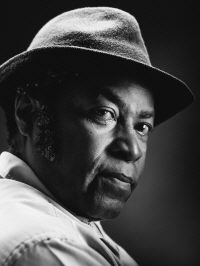














 Biography